As the United States realigns its security interests in Africa, it envisions a continent that must secure its borders and manage regional conflicts with reduced reliance on U.S. intervention.
On March 19, 2026, Nick Checker, Senior Bureau Official for African Affairs, outlined the Trump administration’s “America First” approach to Africa at the Powering Africa Summit in Washington, DC. The framework emphasized reciprocal engagement aligned with U.S. interests and rested on three pillars: commercial diplomacy, a recalibrated foreign assistance model, and a new approach to conflict resolution centered on “burden shifting” to regional actors.
This article focuses on the security dimension of that framework, examining what a doctrine of “manage your own conflicts” means in practice and where its contradictions lie.
What Does “Manage Your Own Conflicts” Really Mean?
The phrase “burden shifting”, framed as encouraging African states to manage their own conflicts appears straightforward but carries layered and potentially conflicting interpretations. At face value, it signals a reduced U.S. appetite for prolonged security engagements and a preference for regional ownership through mechanisms such as the African Union.
However, within the broader “America First” framework, the concept may also reflect a more selective model of engagement, one in which U.S. involvement is determined less by the scale of conflict and more by the presence of direct strategic or economic interests. In this reading, intervention becomes conditional or more likely where it aligns with priorities such as counterterrorism, critical minerals, or strategic trade corridors.
In all of this, the U.S. philosophy proposes a reduction of long-term obligations while maintaining the capacity to act selectively, rather than a full shift from conflict management.
Selective Engagement in Practice: Strategy and Contradictions Across the Continent
The current United States engagement across Africa increasingly reflects a pattern of selectivity, where democratic principles, security priorities, and diplomatic commitments are applied unevenly across contexts. This evolving approach is most visible in countries such as Somalia, the Sahel, Sudan, and the Great Lakes region, while also raising questions about the future of U.S. military partnerships in countries such as Kenya and Ethiopia.
In Somalia, U.S. policy illustrates both continuity and contradiction. The decision by President Donald Trump to withdraw U.S. forces in 2020, framed by the assertion that the United States should not act as “the world’s police” was reversed by Joe Biden, who redeployed troops to support counterterrorism operations against Al-Shabaab. Yet even as broader debates about engagement persist, U.S. airstrikes and security cooperation continue, underscoring that counterterrorism remains a consistent priority regardless of shifts in rhetoric.
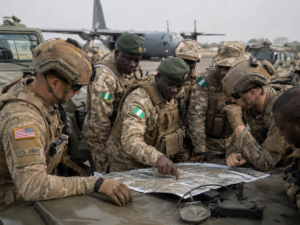
In the Sahel, U.S. policy initially reflected a firmer adherence to democratic norms. Following military coups in Niger, Mali, and Burkina Faso, Washington imposed sanctions and suspended security assistance, citing opposition to unconstitutional changes of government. These decisions produced immediate strategic consequences. Niger requested the withdrawal of U.S. forces and the closure of a key drone base, while Mali similarly reduced cooperation after assistance was curtailed.
Relatedly, this reduction in U.S. engagement created a vacuum that external actors were quick to exploit. Russia, through security partnerships and paramilitary support, and China, through expanded economic and political engagement, moved to deepen their presence in parts of the Sahel. Their involvement has not only reshaped local security dynamics but also altered the broader geopolitical balance in the region.
Recent indications of selective U.S. re-engagement suggest an awareness of this shift. Washington now appears to be recalibrating its approach, seeking to reassert influence in a region where strategic space had been partially ceded. This raises a central question: to what extent are democratic principles guiding U.S. policy, and when are they subordinated to strategic competition and security imperatives?
Sudan presents a different dimension of this selectivity. The United States has historically played a central role in supporting negotiations aimed at restoring civilian rule and stabilizing the country. However, as U.S. engagement becomes more restrained, its diplomatic visibility in Sudan’s ongoing conflict appears diminished. In the absence of sustained external mediation and pressure, prospects for a negotiated settlement risk weakening, highlighting the limitations of a more selective and interest-driven approach.
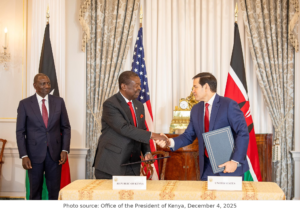
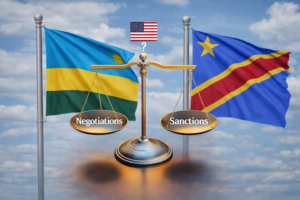
In the Great Lakes region, U.S. policy reveals further contradictions. Washington has actively supported diplomatic efforts between Rwanda and the Democratic Republic of Congo (DRC), encouraging negotiations aimed at de-escalating tensions linked to armed groups operating in eastern DRC. While a peace framework was advanced through these efforts, subsequent U.S. sanctions targeting elements of Rwanda’s military leadership have strained relations with Kigali and risk complicating the very diplomatic process Washington helped initiate. This sequence of facilitating negotiations while simultaneously imposing punitive measures has contributed to renewed tensions between Rwanda and the DRC, underscoring the difficulty of balancing pressure with partnership in conflict resolution.
Beyond these conflict zones, questions also arise regarding the future of U.S. military infrastructure and partnerships. In Kenya, long a key security partner, the United States has relied on joint facilities and access agreements that support operations across the region, particularly as a launch platform for air and drone operations into Somalia. If broader engagement is scaled back or restructured, the sustainability and strategic purpose of these arrangements may come into question.
Similarly, in Ethiopia, U.S. security engagement, historically linked to regional counterterrorism coordination and access to facilities such as Camp Lemonnier in neighboring Djibouti faces uncertainty amid shifting political relations and regional instability. Ethiopia’s internal conflicts and evolving foreign policy posture further complicate the trajectory of U.S. involvement, raising questions about how security cooperation will adapt in a changing regional landscape.
Analytically, these cases reveal a broader pattern. U.S. policy in Africa is no longer defined by uniform principles, but by context-driven prioritization. Where counterterrorism and immediate strategic interests are at stake, engagement persists or adapts. Where outcomes require sustained diplomatic investment or present political complications, involvement may recede or become inconsistent. This evolving approach doesn’t signal disengagement, but a reordering of priorities with uneven and, at times, contradictory implications across the continent.
AFRICOM and the Limits of Reduced Engagement
The re-evaluation of U.S. engagement in Africa raises fundamental questions about the future role of the United States Africa Command (AFRICOM). Established to coordinate U.S. military partnerships, counterterrorism operations, and security cooperation across the continent, AFRICOM’s relevance has historically depended on sustained engagement with African states.
However, as U.S. policy becomes more selective, cutting or suspending security assistance in response to political developments such as coups, while simultaneously reducing broader diplomatic and development engagement, the operational space for AFRICOM becomes increasingly constrained. Where partnerships are scaled back or access is withdrawn, as seen in parts of the Sahel, AFRICOM’s ability to project influence and maintain a consistent regional presence is diminished.
At the same time, continued counterterrorism operations in places like Somalia suggest that AFRICOM’s role is not disappearing but evolving into a more narrowly defined, interest-driven posture. Rather than broad-based security cooperation, engagement is becoming concentrated in areas where immediate strategic priorities -particularly counterterrorism, justify continued involvement.
This shift exposes a critical tension: in the absence of consistent political and diplomatic partnerships, AFRICOM’s ability to sustain meaningful regional engagement becomes increasingly constrained. What emerges is a more episodic, transactional instrument of U.S. policy, one that reflects the priorities of the current administration rather than a settled strategic consensus. As such, its trajectory remains contingent; a subsequent administration may adjust course toward more sustained political and diplomatic engagement, reshaping both U.S. military posture in Africa and the broader architecture of security cooperation on the continent.
A Strategic Shift, Not Withdrawal
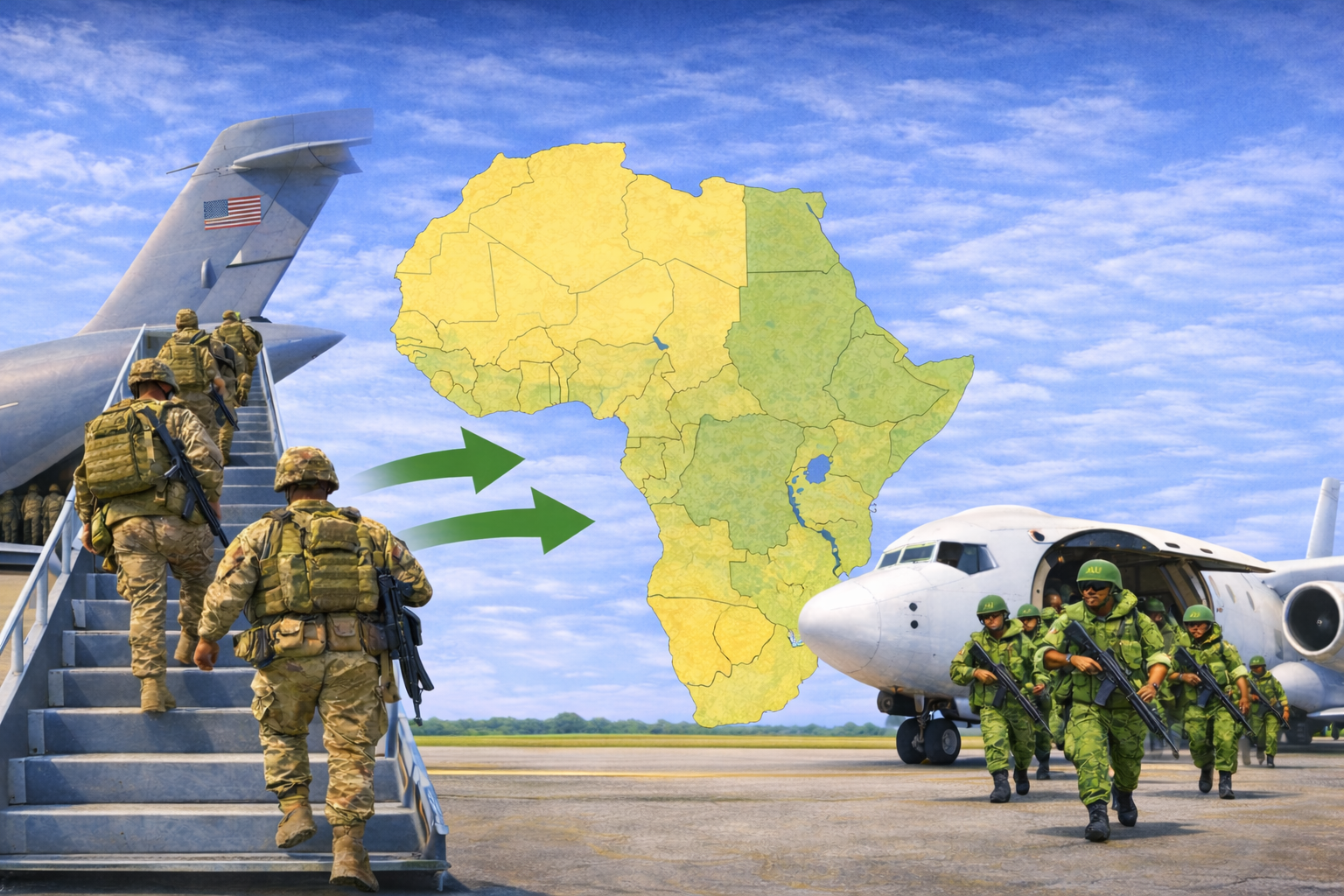
U.S. security policy in Africa is not defined by withdrawal, but by redesigning. Rather than maintaining long-term, broad-based commitments, Washington is shifting toward a more selective approach, intervening where its interests are most immediate while scaling back elsewhere.
This shift also places greater responsibility on the African Union and its member states to manage security challenges on the continent. It aligns with the long-standing principle of “African solutions to African problems,” while simultaneously reinforcing expectations that African actors assume a larger share of the operational and financial burden of peace and security.
In this context, the recent United Nations Security Council decision to enable more predictable financing for African Union-led peace operations reflects a carefully negotiated compromise. While the framework allows the UN to cover up to 75 percent of mission costs, it also incorporates a key U.S. position that African states must demonstrate financial commitment by contributing the remaining share. In practice, this means that AU-led missions are expected to mobilize their 25 percent contribution as a condition for accessing UN support. The approach reinforces burden-sharing while introducing a measure of accountability, ensuring that external financing complements, rather than substitutes for, regional responsibility in managing conflicts on the continent.
At the same time, this realignment creates a dual dynamic. African states are encouraged to take greater ownership of their security yet remain embedded in a system where external support is uneven, conditional, and driven by shifting strategic priorities.
At its core, this approach reflects a simple logic of reducing costs while retaining influence. However, it also introduces uncertainty, raising questions about the reliability and long-term sustainability of both U.S. security partnerships and African-led security initiatives.
Implications and Constraints of the Burden-Sharing Model
While the “manage your own conflicts” framework reflects a shift toward realism and reduced U.S. commitments, it also carries significant strategic limitations for both the African security and U.S. interests.
First, a highly selective approach to security engagement risks undermining the interconnected nature of global security. Instability in fragile regions does not remain contained. Reduced and inconsistent engagement may allow localized conflicts to escalate into broader regional crises, with implications for terrorism, migration, and transnational insecurity that ultimately affect U.S. interests.
Second, disengagement, particularly where it creates security vacuums, provides strategic opportunities for other global actors. China and Russia have already demonstrated a willingness to expand their presence in African security and governance spaces. In this context, reduced U.S. involvement is not neutral; it reshapes influence on the continent and may weaken Washington’s long-term strategic positioning.
Third, the perception of selective engagement tied to strategic or economic interests risks eroding trust among African partners. Where security cooperation appears conditional or driven by access to natural resources or specific geopolitical priorities, it may prompt countries to diversify partnerships and seek alternative alliances. Over time, this could diminish U.S. influence and reduce its ability to shape outcomes on the continent.
Fourth, the recalibration of U.S. security engagement raises questions about the future of counterterrorism efforts. The global war on terror, once characterized by sustained and coordinated international engagement, risks being reduced to episodic or interest-driven interventions. Such an approach may weaken long-term counterterrorism gains, particularly in regions where extremist groups exploit governance gaps and fragile institutions.
Finally, while the principle of regional ownership is valid, the current capacity of many African security institutions remains uneven. Without sustained external support, the expectation that African states can independently manage complex conflicts may place disproportionate pressure on regional mechanisms that are still evolving in both capability and financing.
Policy Implications and Recommendations
The “manage your own conflicts” framework raises important strategic questions not only for African security, but for the long-term sustainability of U.S. influence on the continent.
First, while reducing financial and operational burdens under the Trump administration may be politically appealing in Washington, a highly selective security posture risks creating uneven stabilization outcomes. In fragile regions such as the Sahel, reduced U.S. engagement has already contributed to security vacuums that external actors, including Russia and China, have moved to fill. As the United States seeks to re-engage in these regions, it should ensure that renewed security partnerships are structured with manageable conditions, reduced bureaucratic barriers, and more direct channels for consultation, allowing partners timely access to support without driving them toward alternative providers.
Second, the increasing linkage between security engagement and commercial priorities risks reinforcing perceptions of transactional diplomacy. Where engagement appears tied to access to natural resources or strategic assets, it may be interpreted not as partnership, but as extraction, potentially weakening U.S. credibility and influence. U.S. policy should therefore avoid overly transactional approaches and ensure that security and economic engagement are structured around transparent, mutually beneficial outcomes.
Third, a reduced U.S. footprint in African security risks undermining long-standing intelligence partnerships that have been central to U.S. counterterrorism effectiveness. As operational engagement declines, partner governments may have less incentive to share timely and actionable intelligence, eroding a critical and hard-earned U.S. advantage. The United States should therefore ring-fence intelligence cooperation as a non-negotiable component of its Africa policy, maintaining continuous information-sharing arrangements and direct access channels regardless of changes in its military footprint.
Fourth, the principle of African ownership of security is both necessary and legitimate. However, it must be supported by strengthened regional mechanisms and predictable financing. The shift toward UN-backed funding for African Union-led operations reflects recognition that African-led missions, as demonstrated in Somalia, Mali, and elsewhere, are essential in stabilizing conflicts and creating conditions for broader international engagement. The United States should therefore avoid policy contradictions by protecting UN-based financing mechanisms that enable AU operations. Efforts to reduce or withdraw support to the UN risk undermining the very burden-sharing model Washington seeks to advance and weaken the effectiveness of African-led security responses.
Finally, a complete retreat from security engagement is neither realistic nor desirable. U.S. global security remains interconnected, and instability in Africa has direct and indirect implications for international security. The challenge, therefore, is not whether to engage, but how to balance reduced direct intervention with sustained strategic involvement that supports both African stability and U.S. interests.
Conclusion
Africa’s assumption of greater responsibility for its own security is no longer in question; its is already underway. What remains uncertain is whether the evolving U.S. approach meaningfully supports this transition through sustained partnership or simply redefines engagement in ways that shift responsibility without a corresponding transfer of power, resources, and strategic trust.
While the desire for African ownership has long existed, the means to sustain it remain constrained. Limited financial capacity continues to tie African-led missions to external funding, often giving donors significant influence over operational decisions. This dynamic raises important questions about the extent to which “ownership” can be exercised in practice when strategic direction is shaped by external priorities.
The future of U.S.–Africa security relations will not depend on the scale of engagement alone, but on its consistency, credibility, and alignment with realities on the ground. For the “manage your own conflicts” framework to be viable, the United States must remain vigilant in upholding commitments that support African-led peace operations, ensuring that shifts in responsibility are matched by reliable and sustained support. A durable approach will require not only transferring responsibility, but enabling it through predictable financing, genuine partnership, and a framework that allows African actors to lead without compromising operational effectiveness.
ATW welcomes collaboration with policymakers, researchers, and institutions working on U.S.–Africa relations, security policy, and strategic engagement.