The political storm surrounding Uganda’s former speaker of Parliament Anita Among has evolved from a controversy over Western sanctions into a broader national debate about corruption, accountability, and institutional credibility in Uganda. Reports of anti-corruption investigations, raids, and scrutiny over unexplained wealth have revived questions that first emerged when London and Washington sanctioned the Speaker in 2024.
At the time, President Yoweri Museveni dismissed the sanctions as foreign interference and defended Among against what the government portrayed as external political pressure. Two years later, however, many of the same allegations that were once publicly rejected appear to be resurfacing within Uganda’s own political and accountability structures.
The central issue is no longer only whether corruption occurred. It is why meaningful domestic accountability appeared delayed until external pressure, public outrage, and shifting political calculations converged.
Governance and Accountability Failures
The Anita Among case raises deeper concerns about the effectiveness and independence of Uganda’s anti-corruption institutions. The delayed institutional response suggested either unwillingness or inability by domestic accountability mechanisms to act decisively at the time.
Uganda already possesses formal accountability structures mandated to investigate corruption and monitor the conduct of public officials. The Inspectorate of Government (IGG), for example, is responsible for enforcing the Leadership Code and overseeing asset declarations by public officials. In principle, institutions tasked with monitoring public accountability should be capable of identifying unusual patterns of wealth accumulation, inconsistencies in asset declarations, or visible lifestyle changes that may warrant further scrutiny even before whistleblowers, political fallout, or international sanctions bring such issues into the public spotlight.
Yet in political systems built around patronage and elite loyalty networks, accountability often becomes selective. Investigations involving powerful officials may depend less on institutional independence and more on shifting political calculations. This creates a perception that accountability is activated only when political protection weakens or when public and international pressure become politically difficult to ignore.
The result is growing public skepticism toward institutions expected to function impartially and consistently. When accountability mechanisms appear reactive rather than proactive, citizens may begin questioning whether anti-corruption institutions are designed to prevent abuse of office or merely respond once scandals become politically unavoidable.
Sanctions as External Accountability Tools
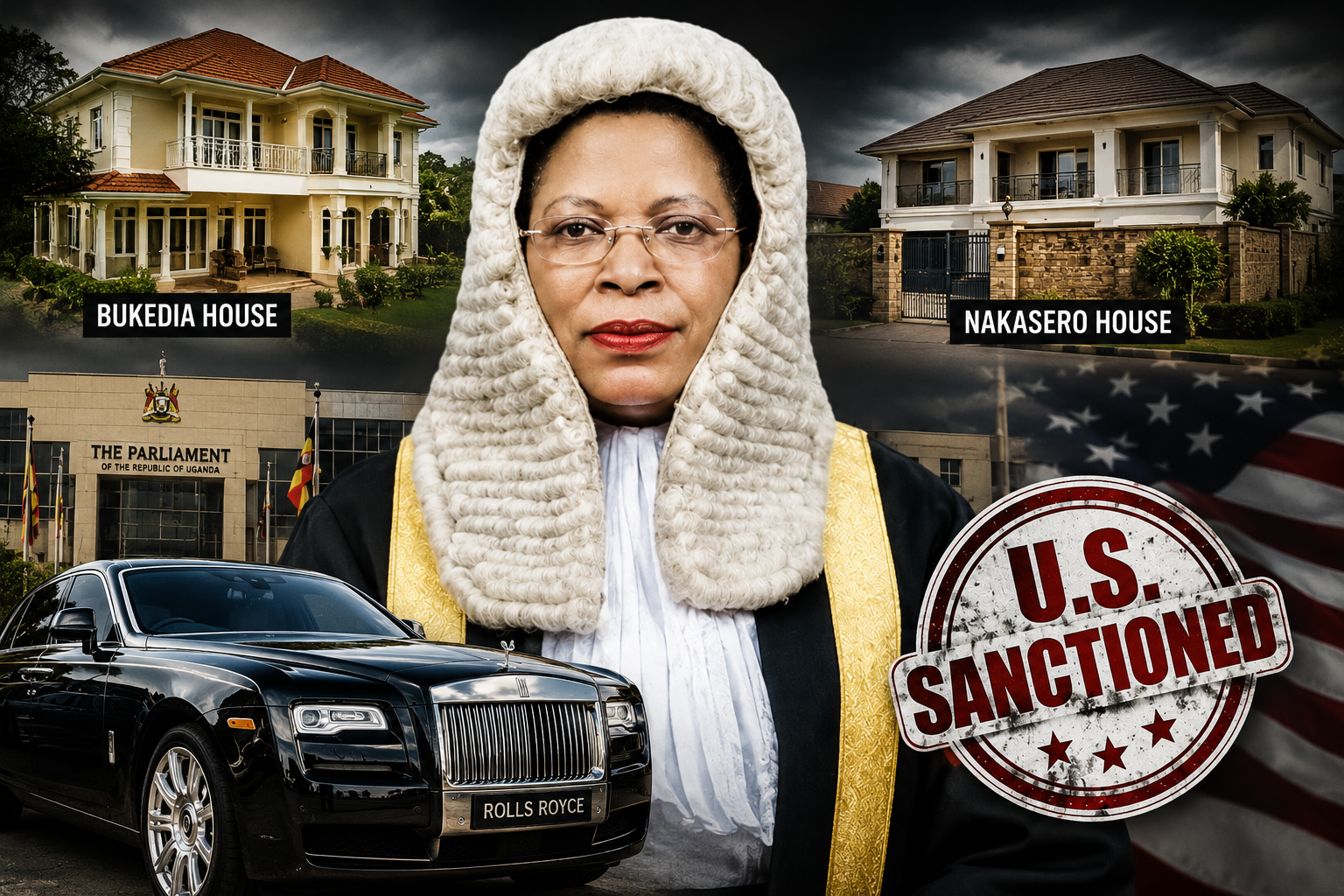
In May 2024, under the administration of Joe Biden, the U.S. State Department publicly sanctioned Anita Among for what it described as “significant corruption tied to her leadership of Uganda’s Parliament.”
The State Department also sanctioned several other Ugandan officials accused of misusing public resources and abusing public office for personal benefit. Among’s husband, Moses Magogo, was also designated and rendered generally ineligible for entry into the United States alongside spouses of other sanctioned officials.
However, while the sanctions announcement publicly stated the basis for the designations, the detailed intelligence, financial evidence, or investigative records underpinning the U.S. decision were not publicly released. The sanctions therefore created an unusual political situation in Uganda. Washington publicly asserted that significant corruption had occurred, while the supporting evidence remained largely outside public view.
This fueled continuing debate within Uganda regarding what exactly U.S. authorities may have uncovered. It remains unclear whether investigators identified suspicious international financial transactions, foreign-linked assets, offshore financial structures, or other forms of evidence connected to the allegations. No publicly available records have conclusively established whether Among held assets in the United States. However, allegations regarding possible assets and financial connections in the United Kingdom later became part of the broader public and political debate surrounding the sanctions.
Sanctions at the level of a sitting parliamentary speaker are rarely imposed casually. Such decisions typically emerge after lengthy reviews involving diplomatic reporting, intelligence assessments, anti-corruption monitoring, financial scrutiny, and interagency legal review processes. In practical terms, the sanctions signaled that Washington believed there was sufficient information to justify extraordinary diplomatic action against one of Uganda’s highest-ranking political figures.
Sovereignty Versus External Influence
Uganda’s response to the U.S. sanctions against Anita Among was framed largely as a sovereignty issue rather than an accountability issue. President Yoweri Museveni publicly defended Among and criticized what he described as foreign interference in Uganda’s internal affairs.
At the time, the government’s position was that Western countries were using sanctions to pressure Uganda politically. The sanctions were therefore presented not as legitimate accountability concerns, but as external attacks on Uganda’s sovereignty and leadership.
Two years later, however, the political environment became more complicated. In 2026, Parliament under Among’s leadership as Speaker passed the controversial Protection of Sovereignty Act, legislation critics said was rushed through Parliament without sufficient public debate or due process.
The law sought to limit foreign influence in Uganda’s political and civic affairs. Some provisions broadly framed foreign support, gifts, funding, and external relationships as possible tools of foreign influence. Critics warned that the law could be used to curtail freedom of speech, crack down on political opponents, civil society groups, and individuals accused of acting on behalf of foreign interests.
Ironically, parts of that same sovereignty framework may now politically rebound against Among herself. Public scrutiny intensified after she reportedly described the Rolls-Royce at the center of public outrage as a gift. At the same time, allegations emerged regarding unexplained wealth and possible foreign-linked financial connections abroad.
The situation created an uncomfortable contradiction for the ruling establishment. A political system that aggressively warned against foreign influence and foreign-linked benefits was now confronting similar allegations surrounding one of its own most powerful officials.
Consequences of Ignored Sanctions and Accountability Failures
The sanctions against Anita Among appear to have produced political and institutional consequences far beyond the original diplomatic measures announced by the United States in 2024.
Politically, the sanctions gradually evolved from an external diplomatic dispute into a broader domestic accountability crisis. Scrutiny intensified following reports of unexplained wealth, luxury spending, and corruption allegations linked to Among. The Rolls-Royce controversy became especially politically damaging after Among reportedly described the vehicle as a gift. In a country facing economic hardship and growing public frustration, the symbolism of extreme elite wealth significantly deepened public anger and widened calls for accountability from sections of the public and civil society.
The sanctions also appear to have influenced Uganda’s increasingly sovereignty-centered political environment. In 2026, Parliament under Among’s leadership passed the controversial Protection of Sovereignty Act, legislation critics argued was rushed through Parliament without sufficient debate or due process. The law sought to restrict foreign influence in Uganda’s political and civic affairs and broadly framed foreign-linked support, gifts, and external relationships as potential sovereignty concerns.
Ironically, aspects of that same sovereignty framework may politically rebound against Among herself. A political system warning against foreign-linked influence and benefits was now confronting allegations involving gifts, unexplained wealth, and possible foreign-linked financial connections surrounding one of its own most senior officials.
The sanctions and subsequent public backlash also appear to have weakened Among’s position within sections of the ruling establishment and created conditions for growing internal pressure, investigations, and calls for accountability. Eventually, President Museveni asked Among to withdraw from the race for a second term as Speaker, followed by growing scrutiny surrounding her leadership and conduct during the 11th Parliament.
Institutionally, the sanctions intensified scrutiny toward Uganda’s accountability institutions, particularly the Inspectorate of Government (IGG). Critics increasingly questioned why allegations serious enough to trigger U.S. sanctions did not earlier generate stronger domestic investigations into Among’s rapidly expanding wealth and alleged misuse of public resources.
The delayed response reinforced perceptions that accountability systems are selective and only become more active after scandals grow politically costly or internationally embarrassing. Critics argued that had Uganda’s accountability institutions acted earlier and more independently, questions surrounding Among’s wealth accumulation and alleged misuse of public resources might have been addressed before escalating into an international governance issue.
The Among case also created growing public doubt regarding the effectiveness and independence of institutions responsible for monitoring asset declarations, investigating corruption, and enforcing accountability standards among senior public officials.
Diplomatically, the sanctions created new tensions in U.S.–Uganda relations, particularly around governance, sovereignty, and external pressure. Uganda’s leadership framed the measures as politically motivated interference, while the United States presented them as accountability actions tied to significant corruption allegations.
The sanctions therefore reinforced broader disagreements between Kampala and Washington regarding governance, anti-corruption enforcement, and the role of external pressure in domestic political accountability.
At the same time, the Among case exposed both the influence and the limitations of sanctions as a foreign policy tool. While sanctions may increase reputational costs and raise international pressure, they do not automatically produce accountability unless domestic political conditions also begin to shift. In Uganda’s case, serious institutional scrutiny appeared to intensify only after public outrage, elite discomfort, and internal political pressure within the ruling establishment grew significantly.
For Uganda, the episode may ultimately serve as a reminder that external sanctions involving senior public officials cannot always be dismissed purely as foreign interference. In some cases, they may also function as warning signals requiring timely domestic institutional review rather than immediate political defensiveness.
Policy Recommendations
For Uganda
Uganda should establish a formal interagency review mechanism requiring automatic domestic assessment whenever senior public officials are sanctioned internationally for corruption-related allegations. Such reviews should involve the Inspectorate of Government (IGG), Financial Intelligence Authority, Auditor General, and relevant parliamentary accountability committees. The purpose should not be to automatically validate foreign sanctions, but to independently determine whether credible governance or financial concerns require domestic investigation.
The government should also consider creating a specialized sanctions and international accountability analysis unit within the Ministry of Foreign Affairs or a broader interagency structure. Such a unit could quietly engage sanctioning states, review allegations objectively, assess possible evidence where appropriate, and advise government on whether institutional action or investigation may be necessary before sanctions disputes escalate publicly into political confrontations.
Uganda should further strengthen the Leadership Code framework by introducing regular lifestyle and asset audits for senior public officials whose visible wealth accumulation appears disproportionate to known public earnings. The IGG should be granted stronger operational independence and enhanced authority to verify asset declarations proactively rather than relying mainly on whistleblower complaints or political referrals.
Senior public officials facing credible corruption investigations should also be required to temporarily step aside from office pending completion of investigations. Such measures would reduce perceptions of political shielding, protect the integrity of investigations, and strengthen public confidence in accountability institutions.
Finally, Uganda should ensure that sovereignty and foreign influence laws are applied consistently across all political actors, including senior state officials. Selective application risks weakening public trust and creating perceptions that anti-corruption and sovereignty frameworks are used mainly against politically weaker actors while powerful elites remain protected.
For the United States
The United States should strengthen diplomatic engagement mechanisms prior to imposing high-profile sanctions on senior foreign public officials, particularly in partner states where governance disputes can quickly escalate into wider diplomatic tensions. Through embassies and diplomatic missions, Washington can engage ministries of foreign affairs, accountability institutions, and relevant government structures to raise concerns, seek clarification, encourage domestic review processes, and assess whether credible institutional action is possible before sanctions disputes become publicly confrontational. Such engagement would not eliminate sanctions where serious misconduct is identified, but it could reduce unnecessary diplomatic friction and create opportunities for domestic accountability systems to respond before disputes evolve into broader sovereignty and nationalist confrontations.
Washington should also provide clearer public explanation regarding the basis of high-profile sanctions involving corruption allegations. While intelligence sources and sensitive financial investigations may remain confidential, greater clarity regarding the nature of alleged misconduct could reduce perceptions that sanctions are politically selective or geopolitically motivated. In politically sensitive environments such as Uganda, limited public understanding of the basis for sanctions can allow governments to dismiss them as foreign interference rather than accountability concerns requiring serious institutional review.
Washington should further develop clearer accountability and review pathways for corruption-related sanctions that do not involve gross human rights violations or international crimes. Such mechanisms could outline the types of corrective actions, investigations, cooperation, or accountability measures that may contribute toward sanctions review or possible removal. This would strengthen the credibility of sanctions as accountability tools rather than allowing them to be viewed solely as permanent political punishments.
Conclusion
The Anita Among case demonstrates that international sanctions involving senior public officials rarely emerge in isolation or without underlying governance concerns. While sanctions may at times carry geopolitical implications, they are often triggered by patterns of allegations, intelligence assessments, financial scrutiny, or accountability concerns considered serious enough to warrant international action. The case therefore illustrates the risks of automatically dismissing sanctions purely as foreign interference or external targeting without objectively examining the underlying allegations and governance issues being raised.
The case further demonstrates that political shielding within state systems is often conditional rather than permanent. Allegations that may initially be defended or politically managed can later become liabilities once they generate sufficient public outrage, elite discomfort, or institutional pressure. Delayed institutional scrutiny may also create conditions in which alleged misuse of public resources, unexplained wealth accumulation, or questionable foreign-linked relationships continue without sufficient accountability oversight until the situation evolves into a broader political and governance crisis.