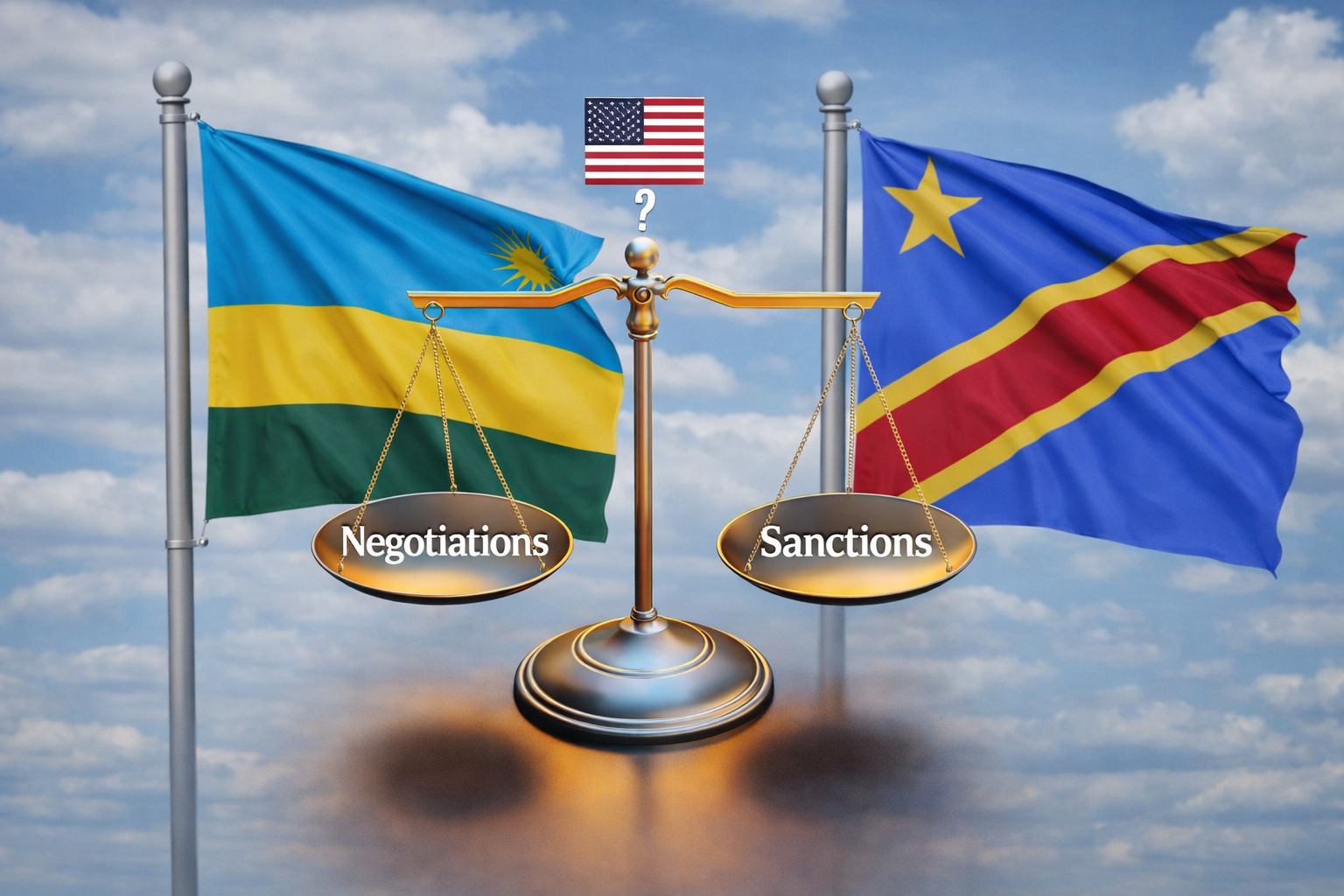
The United States recently imposed sanctions on the Rwanda Defense Force (RDF) and four senior military officers it accuses of supporting the M23 rebellion in eastern Congo. The move comes at a critical time, as Washington brokered a diplomatic framework between Rwanda and the DRC to ease tensions and stabilize the region.
This dual-track approach has produced a striking contradiction in U.S. diplomacy. While positioning itself as a mediator between Kigali and Kinshasa, Washington has simultaneously taken punitive action against Rwanda’s military leadership, raising questions about the coherence of U.S. policy. Can a peace initiative hold when one party is sanctioned during negotiations? And how might these measures shape Rwanda’s security calculations, the trajectory of the M23 rebellion, and broader regional stability in the Great Lakes?
Answering these questions requires examining the nature of the sanctions, the political context in which they were introduced, and the deeper historical dynamics that continue to drive conflict in eastern Congo.
What U.S. Sanctions on Rwanda Mean
Sanctions come in different forms, and their effects are often gradual rather than immediate. While they have long been used as a policy tool, their effectiveness has become less predictable as targeted actors adapt and develop ways to manage or bypass restrictions.
In the case of Rwanda, several mechanisms are likely to be applied. First, asset freezes may restrict access to financial resources held under U.S. jurisdiction. Second, travel restrictions may prohibit sanctioned individuals from entering the United States. Third, financial measures may limit the ability of American individuals, companies, and institutions to conduct transactions with designated persons or entities.
These sanctions are intended to function as a form of coercive diplomacy. Rather than using military force, governments apply economic and financial pressure to influence behavior or signal political disapproval. Because of the central role of the U.S. dollar in the global financial system, such measures can also have wider effects, discouraging international banks and businesses from engaging with targeted actors.
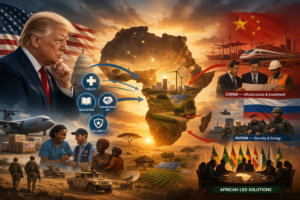
However, sanctions do not operate in isolation, and their impact depends on how states respond. In Rwanda’s case, alternative partnerships could help offset some of the pressure. External actors such as China or Russia, both of which have expanded their presence in regions where U.S. engagement has declined, may provide economic or security cooperation that reduces the impact of U.S. measures. For example, a similar pattern emerged in Mali, where the suspension of U.S. security assistance after the coups was followed by deeper security ties with Russia for military assistance, and increased engagement with China in infrastructure development and defense capabilities.
At the same time, sanctions carry potential risks. They may strain existing security cooperation between Washington and Kigali or shift engagement toward less transparent channels. In some cases, pressure on individual military officials may also affect institutional dynamics, particularly if senior officers are directly impacted, with implications for command cohesion, operational effectiveness, and strategic decision-making. There is also a risk that sanctions could harden positions or encourage more indirect forms of engagement in the conflict, potentially complicating efforts to stabilize eastern Congo.
In the Rwanda–DRC context, these measures may carry broader political and security implications. They are likely to strain relations between Washington and Kigali while further complicating an already fragile relationship between Rwanda and the DRC. In this environment, sanctions could shift conflict dynamics, potentially encouraging more indirect forms of engagement. Pressure on alleged support networks may also reshape how armed groups such as the M23 operate, rather than eliminating their presence. However, sanctions are unlikely to fundamentally alter Rwanda’s position in eastern Congo, particularly given Kigali’s consistent denial of involvement and the security considerations it associates with the conflict. Rwanda argues that the Democratic Forces for the Liberation of Rwanda (FDLR), an armed rebel group operating from eastern Congo, pose a direct threat to its government. As long as these concerns remain unresolved, its involvement in the DRC is unlikely to diminish.
The Washington Initiative: Security, Minerals, and Strategic Alignment
The Washington framework reflects a structured attempt to manage tensions between Kigali and Kinshasa through a mix of political engagement and economic incentives. Rather than a formal peace agreement, it signals a shift toward stabilizing the conflict while advancing longer-term strategic cooperation, particularly around security and access to mineral resources in eastern Congo.
For the Democratic Republic of Congo, the framework emphasizes the restoration of state authority in the east. This includes commitments to strengthen control over territory, improve governance of the mining sector, and cooperate with international partners in formalizing mineral production and trade. In return, Kinshasa stands to benefit from increased U.S. political backing and potential investment in its minerals sector. The Washington Rwanda DRC deal followed Kinshasa’s request for direct U.S. support in addressing the M23 insurgency, though the precise scope of Washington’s commitments remains unclear.
Rwanda’s role within the framework is more implicit but equally significant. Kigali faces sustained international pressure over alleged support to the M23 rebellion, and the initiative creates space for de-escalation by encouraging restraint and reduced involvement in eastern Congo. At the same time, Rwanda remains a critical regional actor whose cooperation is necessary for any durable security outcome, allowing it to retain strategic relevance while managing external scrutiny.
For the United States, the initiative reflects a deliberate effort to link conflict management with an economic strategy. Rather than pursuing direct military intervention, Washington’s role centers on diplomatic mediation, targeted security assistance, and facilitating investment in critical mineral supply chains. This includes support for more transparent and formalized mining systems, infrastructure development, and long-term commercial partnerships that align with broader U.S. strategic interests.
The terms of the framework therefore operate along a dual track. On the one hand, they aim to reduce violence through restraint, dialogue, and strengthened state capacity. On the other, they seek to reorganize the political economy of eastern Congo’s mineral sector by shifting it toward more regulated and internationally integrated systems. In this model, stability is not only a security objective but also a prerequisite for economic engagement.
This alignment of security and resource interests introduces both opportunity and tension. While the framework may incentivize cooperation among the parties, it also risks reinforcing perceptions that peace efforts are closely tied to strategic competition over critical minerals. As a result, the success of the initiative will depend not only on its ability to reduce conflict, but also on how its underlying economic motivations are interpreted by regional actors.
The M23 Conflict and the Sanctions Dilemma
While current tensions are often framed as a dispute between Rwanda and the Congolese government, the M23 conflict is rooted in long-standing grievances around identity, citizenship, political representation, local power struggles, and control over mineral resources in eastern Congo, as well as the failure of successive governments to follow through with peace agreements over the years.
M23 draws support from segments of Congolese Tutsi communities who have historically contested their status and inclusion within the state. Over time, these grievances have become intertwined with broader regional security dynamics, including Rwanda’s concerns over armed groups operating near its borders.
This layered conflict environment complicates external intervention in a region that has over 100-armed groups operating in eastern Congo. The crisis is not driven by a single actor but by a convergence of internal political tensions, economic interests tied to mineral-rich territories, and cross-border security considerations.
Within this context, U.S. sanctions targeting the Rwanda Defense Force (RDF) and senior military officials introduce a strategic dilemma. It remains unclear whether such measures can meaningfully alter Rwanda’s behavior or reduce support for armed groups such as the M23. Sanctions may increase diplomatic pressure, but they could also harden positions, limit cooperation, or incentivize indirect forms of engagement that are more difficult to monitor.
More fundamentally, targeting individuals does not directly address the structural drivers of the conflict inside the DRC. As a result, the effectiveness of sanctions in changing the trajectory of violence remains uncertain, raising questions about whether they can deliver the intended stabilizing outcomes without complementary political and security measures.
Rwanda’s Response to the Sanctions
Rwanda has firmly rejected Washington’s sanctions, arguing that they fail to account for its core security concerns. Government spokesperson Yolande Makolo criticized the measures, stating that sanctioning Rwanda would not resolve the conflict in eastern DRC and overlooks the broader dynamics driving instability.
Rwandan officials consistently point to the presence of the Democratic Forces for the Liberation of Rwanda (FDLR), an armed group linked to perpetrators of the 1994 genocide who continue to operate from eastern Congo, as a central justification for Rwanda’s security posture. President Paul Kagame has repeatedly emphasized that no state would tolerate such a threat along its borders.
From Kigali’s perspective, sanctions that target Rwanda while failing to address other armed groups create an unbalanced and incomplete diplomatic approach, reinforcing the view that its security concerns are only selectively acknowledged.
Challenges and Contradictions in the Use of Sanctions
The use of sanctions in the Rwanda–DRC context introduces tensions that risk undermining the very diplomatic framework Washington is attempting to build.
From Rwanda’s perspective, the measures may appear selective and unbalanced. Kigali has consistently argued that the conflict in eastern Congo involves multiple armed actors, including the FDLR, which it views as a direct security threat. Targeting Rwanda while these broader dynamics remain insufficiently addressed risks reinforcing perceptions of asymmetry in U.S. policy.
The timing of the sanctions further complicates their impact. Imposed alongside active diplomatic efforts, they risk weakening the cooperative environment necessary for sustained negotiations. Rather than reinforcing diplomacy, punitive measures introduced during this phase may reduce incentives for compromise and deepen mistrust between the parties.
This challenge is compounded by a central policy gap. While U.S. sanctions focus on Rwanda’s alleged support for M23, they are not matched by a clearly articulated strategy to address the FDLR threat. This imbalance risks signaling that Rwanda’s core security concerns are only partially acknowledged, complicating efforts to secure meaningful cooperation.
From the Democratic Republic of Congo’s perspective, U.S. sanctions on Rwanda may be politically welcomed as validation of its long-standing claims regarding external involvement in the conflict. However, this support is not without risk. Increased pressure on Rwanda could contribute to heightened tensions on the ground, particularly if it hardens positions or triggers retaliatory dynamics through allied armed groups. In this sense, while sanctions may offer short-term diplomatic advantage to Kinshasa, they do not necessarily translate into improved security conditions.
At the same time, developments on the ground, including continued military activity and targeted actions against armed group leadership, underscore the fragility of the situation. Even when not directly linked to U.S. actions, such dynamics shape perceptions of the broader diplomatic environment and can erode confidence in the process.
More broadly, sanctions may encourage strategic recalibration rather than compliance. If perceived as politically motivated or misaligned with security realities, they are unlikely to alter core behavior and may instead push actors to adapt their strategies while maintaining their objectives.
Finally, U.S. engagement in the DRC’s critical mineral sector introduces an additional layer of complexity. Efforts to secure mineral supply chains, while strategically significant, may influence how regional actors interpret U.S. intentions, potentially blurring the line between conflict mediation and geopolitical economic competition.
Sanctions as a Missed Strategic Opportunity
Sanctioning Rwanda may ultimately represent a missed opportunity for more effective conflict resolution. While sanctions are intended to compel behavioral change, they can also reduce diplomatic leverage at a critical moment in negotiations.
If the objective is to influence Rwanda’s posture toward armed groups operating in eastern Congo, including alleged support for M23, sustained diplomatic engagement may offer greater long-term impact than punitive measures introduced during active negotiations. Sanctions risk hardening positions rather than encouraging cooperation.
At the same time, Rwanda has consistently framed its involvement in eastern Congo in relation to security threats posed by armed groups such as the FDLR. Without a parallel strategy that addresses these concerns, sanctions alone are unlikely to shift Rwanda’s strategic calculations.
In this context, punitive measures may limit Washington’s ability to act as an effective mediator. Rather than creating incentives for de-escalation, they risk narrowing the space for negotiation and reinforcing perceptions of bias. This dynamic suggests that sanctions, while symbolically significant, may not represent the most effective tool for resolving the underlying drivers of the conflict.
Targeted Sanctions and Limited Leverage: Why Pressure on Rwanda Falls Short
Sanctions are often framed as powerful tools to compel states to change behavior. In practice, their impact varies significantly depending on how they are designed. In the case of Rwanda, the United States has imposed sanctions on the Rwanda Defense Force (RDF) and targeted measures on individual military officers. This distinction is critical.
Unlike comprehensive sanctions regimes, targeted measures do not disrupt trade, restrict access to global markets, or halt development financing. As a result, Rwanda’s core economic sectors such as investment, infrastructure, and public finances remain largely unaffected. There is little evidence to suggest that such sanctions would stall national development or significantly alter Rwanda’s economic trajectory.
Instead, the effects are narrower and more indirect. Sanctioned individuals may face travel bans, asset freezes, and reputational costs, creating operational and diplomatic friction. At the same time, these measures serve as a political signal of international disapproval, shaping how Rwanda is perceived in global forums.
However, this approach also exposes the limits of coercion. When the actions in question are tied to perceived national security interests, governments are unlikely to shift course in response to pressure on individuals alone. States can reassign roles, insulate key actors, and continue pursuing strategic objectives through alternative channels.
The experience of other sanctioned states reinforces this pattern. Russia, for example, mitigated the impact of Western sanctions by redirecting trade toward non-Western partners, including expanding economic and diplomatic engagement across parts of Africa. Similarly, following coups in Mali, Burkina Faso, and Niger, Sahelian governments, despite facing Western pressure and reduced cooperation, shifted toward alternative partnerships with Russia and China, allowing them to maintain regime stability, albeit under more constrained conditions. Notably, even as these governments remain in power, external actors have gradually recalibrated their engagement. The United States, under shifting strategic priorities, has shown signs of re-engagement in parts of the Sahel despite earlier positions against unconstitutional changes of government. This underscores a broader reality. Sanctions rarely produce isolation in a globalized system. Instead, they often accelerate geopolitical realignment and eventual diplomatic adaptation.
In this context, targeted sanctions on Rwanda are unlikely to fundamentally alter its approach to the eastern DRC crisis. The underlying drivers, security concerns, regional rivalries, and competition over resources, remain intact. Sanctions may constrain individuals, but they do not disrupt the state, making them better understood as instruments of political signaling rather than tools capable of compelling strategic change.
Policy Recommendations
For the United States, Washington should complement sanctions with credible diplomatic leadership. Framing engagement around resource access, such as implicit “minerals-for-security” arrangements, risks reinforcing perceptions of external exploitation and undermining legitimacy. If the United States aims to support a sustainable peace process, it should consider convening a second round of talks that includes all key conflict actors, including the M23. While politically sensitive, excluding central actors who control territory and resources limits the prospects for a durable settlement.
The United States should also reconsider its reduced support for multilateral stabilization efforts, particularly the United Nations mission in the DRC. The appointment of James Swan to lead the United Nations Organization Stabilization Mission in the Democratic Republic of the Congo (MONUSCO), alongside Kinshasa’s decision to pause the expulsion of UN forces, underscores the continued necessity of an international security presence.
A stable eastern Congo is not only a security objective but a prerequisite for sustained economic engagement. Ongoing instability risks complicating U.S. strategic interests, including emerging bilateral cooperation in critical mineral supply chains. Aligning support for stabilization efforts with economic objectives would therefore strengthen both peace prospects and the viability of long-term U.S. engagement in the DRC.
For the Democratic Republic of Congo, Kinshasa should revisit and assess previous peace agreements, particularly those that addressed longstanding grievances the M23 continues to invoke. At the same time, the government should weigh the strategic necessity of engaging in structured dialogue with all armed actors, including the M23, which they have often avoided in negotiations. With the drawdown of regional forces from the Southern African Development Community (SADC), the risk of renewed territorial advances increases, making a purely military approach less viable. Carefully managed engagement, while controversial, may help stabilize the situation or prevent further escalation.
For Rwanda, Kigali should engage directly with Washington to address the specific allegations underlying the sanctions. If the objective is eventual removal, Rwanda will need to demonstrate measurable compliance, including taking verifiable steps to distance itself from armed groups operating in eastern Congo and cooperating with credible monitoring mechanisms.
Attempts to ignore U.S. concerns risk prompting escalation of sanctions beyond individuals, potentially expanding to entities or sectors that could carry broader economic and financial implications. Given the United States’ growing strategic interest in stability and mineral supply chains in eastern DRC, sustained non-cooperation could also lead Washington to deepen security and diplomatic engagement with Kinshasa, further isolating Kigali’s position.
A more effective approach would combine firm articulation of Rwanda’s security concerns with targeted, verifiable actions that reduce tensions and create a pathway for sanctions relief. Sanctions relief will ultimately depend less on rhetoric than on demonstrable, verifiable changes in behavior.
Conclusion
Washington’s decision to impose sanctions on Rwanda while simultaneously brokering a peace framework between Kigali and Kinshasa reflects the complexity of modern diplomacy in Africa.
Sanctions may signal political pressure, but the deeper drivers of the eastern Congo conflict, including historical grievances, mineral competition, and regional security concerns, cannot be resolved through punitive measures alone.
For peace to take hold, diplomatic initiatives must address the underlying political and security realities shaping the conflict. Otherwise, the Washington framework risks becoming another chapter in a long history of peace agreements that fail to resolve the deeper dynamics driving instability in eastern Congo.
Africa Through Washington is open to collaboration and partnerships on policy, peace, and security issues across Africa.