The Democratic blue wave creates a congressional opportunity to reshape U.S.–Africa relations and raises a consequential question over USAID’s return. How much can the new political balance deliver?
Democrats have captured both chambers of the United States Congress in the November 3 midterm elections, delivering a sweeping rebuke to President Donald Trump and his ‘Make America Great Again’(MAGA) Republican Party.Voter anger over the cost of living, the economy, extreme immigration raid, corruption and the war in Iran helped drive the result. When the new Congress takes office on January 3, 2027, Washington will enter a period of divided government. For Africa, however, the political meaning of the blue wave is more complicated than a change in party control.
Africa was not on the ballot, nor at the center of the American campaign, yet decisions in Washington affect relations with African governments, the conduct of diplomacy, access to the United States, development programmes, trade, peace and security and the like. The central question is whether the Democratic victory will produce a more constructive American approach to Africa or merely place stronger political checks around policies that the Trump administration still intends to pursue.
The blue wave opens a new opportunity to reshape U.S.–Africa policy
The Democratic blue wave presents an opportunity to reconsider the direction of American foreign policy toward Africa, rather than merely respond to decisions taken by the White House. With control of both chambers, Democrats can use their legislative, budgetary and oversight powers to challenge aspects of the administration’s transactional diplomacy and promote a more sustained approach to engagement with the continent. Congressional committees can hold hearings on the consequences of existing policies, call senior officials to account, examine agreements made with African governments and press for fuller consultation with African institutions. Control of the Senate also gives Democrats influence over the confirmation of ambassadors and senior foreign policy officials. Together, these powers could help place alternative Africa policy priorities before Washington, even while the president remains responsible for conducting diplomacy.
This institutional divide will be tested by Trump’s distinctly transactional approach to Africa. His administration has emphasized bilateral bargains, critical minerals, commercial advantage and security arrangements offering identifiable benefits to Washington. In a study published in African Affairs, Nicholas Westcott, a diplomacy scholar at SOAS University of London, described a belief that the United States can maintain influence through “purely transactional diplomacy.” He argues that treating the continent primarily as a source of minerals and profits narrows the relationship at the expense of wider diplomatic engagement.
The opportunity is not limited to criticism of the administration. Lawmakers could seek clearer objectives for American involvement in African peace processes, its interests in critical minerals, examine whether security partnerships advance durable settlements, scrutinize the effects of immigration restrictions and use appropriations to support diplomatic engagement and essential international programmes. Such initiatives would give African countries and institutions additional ways to influence the terms of Washington’s engagement. The Council on Foreign Relations has cautioned that the new Democratic majorities are not large enough to override a presidential veto on their own. Trump can therefore resist legislation and continue setting executive policy. Nonetheless, the blue wave offers Congress a chance to set a more constructive agenda and to make U.S.–Africa relations the subject of sustained legislative attention, not simply an extension of the White House’s next bilateral bargain.
Can the blue wave bring USAID back?
The future of the United States Agency for International Development is perhaps the clearest test of what this election can and cannot change. The Trump administration dismantled USAID’s operational structure in 2025 and transferred remaining programmes to the State Department. A September 2026 Government Accountability Office report found that approximately 6,780 of 7,510 USAID awards had been terminated between January 2025 and March 2026. The agency’s worldwide staffing had fallen from about 13,600 in January 2025 to 241 by April 2026. This was not a routine budget adjustment but a fundamental disruption of America’s development machinery, with consequences for African health, humanitarian and other partnerships.
Democrats have resisted formally abolishing USAID in law, which means its legal foundation has not vanished along with its operations. Representative Gregory Meeks has challenged the dismantling and argued that development assistance remains an instrument of American influence. But preserving an agency in statute is very different from rebuilding its workforce, country offices, grants and institutional relationships. That would require money, time and executive cooperation from an administration that dismantled it in the first place.
The immediate possibilities are therefore narrower than a full USAID comeback. Stimson Center analyst Evan Cooper suggests Democrats could “restart some funding flows and foreign aid” and help organizations damaged by earlier cuts. Asher Moss of the Alliance for American Leadership, speaking to Devex before the vote, said he did not believe USAID would return during the next Congress. Appropriations and oversight may revive selected health, food-security and humanitarian programmes, while a fully independent agency remains a longer-term political question. Moreover, a funding allocation is not the same as an implemented programme when the executive branch controls its administration.
For African partners, the practical test should not be confined to whether the familiar USAID name reappears. It is whether reliable services reach communities, whether agreements and funding decisions are transparent, and whether the United States can rebuild trust after abrupt interruptions. The same accountability concerns appear in the GAO’s finding that the State Department lacked complete data and documented guidance for aspects of foreign-assistance management. Congress can press for answers, but restoration will be gradual and politically contested.
The wider political consequences for Africa
Immigration restrictions affecting African countries present another area where the changing political environment in Washington could influence U.S.–Africa relations. In August 2026, a federal court struck down the Trump administration’s suspension of immigrant visa issuance to nationals of 75 countries, including several African nations, ruling that the policy exceeded the Secretary of State’s legal authority. The U.S. State Department subsequently confirmed that the suspension was no longer in effect. However, separate presidential travel restrictions affecting 39 countries remain in place. The incoming Democratic Congress could build on this judicial intervention by examining the diplomatic consequences of these restrictions, demanding greater transparency in visa policies, and pressing the administration to reconsider measures that undermine family reunification, educational exchanges, professional mobility, and people to people relations between Africa and the United States. While congressional action cannot automatically overturn presidential restrictions, lawmakers have an opportunity to influence immigration policy through legislation, oversight, and sustained diplomatic engagement.
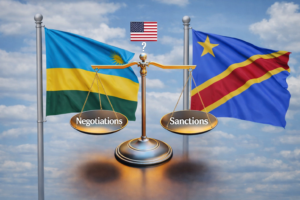
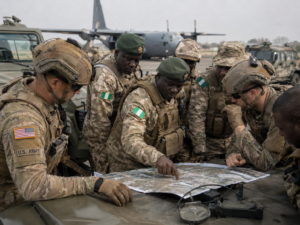
Peace and security will be another measure of the shift. In Sudan, eastern Democratic Republic of Congo and the Horn of Africa, African states must assess whether American engagement supports durable political settlements and African-led institutions or prioritizes short-term geopolitical bargains. Congressional hearings, appropriations conditions and oversight of security cooperation could encourage greater attention to civilian protection and regional diplomacy. Yet the Iran war and domestic battles over the federal budget may consume much of the new majority’s political energy, leaving African issues competing for sustained attention.
Democratic control could also bring renewed scrutiny of governance, constitutional order and human rights, areas that some African civil society organizations may welcome and some governments may regard as intrusive. Neither response should be assumed to speak for the whole continent. Democratic lawmakers will continue to pursue American national interests, just as Republicans do, and may disagree among themselves on what engagement with Africa should achieve. Meanwhile, the Senate’s role in confirming American ambassadors offers leverage over diplomatic appointments, but partisan confrontation could also prolong vacancies rather than improve representation.
Stimson Center senior fellow Andrew Hyde argues that the election will provide “alternative, empowered voices in Washington” for international partners. That may be the most immediate change African diplomats can count on. More congressional access creates openings for advocacy and dialogue. It does not erase differences between the executive and legislative branches, and it should not be mistaken for a guarantee that Washington will suddenly become more consistent or attentive to African priorities.
Embassy Closures, Visa Bonds and Their Diplomatic and Economic Costs to America
The Trump administration’s restructuring of America’s diplomatic presence in Africa raises questions about Washington’s long-term influence on the continent. Following proposals to close several American embassies, the State Department transferred routine visa services from 25 African diplomatic posts to 20 regional hubs in August 2026. Although these embassies generally remain operational, applicants must now travel to designated regional centers, increasing costs and complicating access to American consular services.
Equally concerning is the administration’s visa bond policy, requiring certain visitors from African countries to deposit up to $20,000 before obtaining tourist or business visas. Although refundable under specified conditions, such amounts remain unaffordable for many travelers. The State Department acknowledged an 83 percent decline in visitor visa issuance in countries covered by its pilot program during its first ten months, raising questions about the policy’s wider consequences.
These restrictions also carry potential costs for America. Fewer visitors could mean lost revenue for airlines, hotels, universities and businesses, while declining visa applications could affect the fees supporting State Department consular operations. United States Citizenship and Immigration Services (USCIS) is separately financed, primarily through immigration-benefit filing fees. Beyond economics, reduced diplomatic accessibility risks weakening the relationships and goodwill that sustain American influence in Africa. Washington must therefore consider whether these measures protect its interests or inadvertently undermine them.
Way Forward Beyond the Midterms
African ambassadors accredited to Washington should use this opening actively on behalf of their countries rather than wait for Democrats to reverse Trump’s decisions. They should maintain direct, working relations with the State Department’s Bureau of African Affairs while engaging the House Foreign Affairs Committee, the Senate Foreign Relations Committee, relevant appropriations panels and lawmakers from both parties. Their diplomatic engagement should be substantive, backed by concise policy proposals on security cooperation, immigration, diplomatic representation and continuity of essential assistance. Meetings should produce follow-up commitments, not simply photographs and expressions of goodwill.
African diplomatic missions in Washington should also strengthen coordinated lobbying efforts through the African Union’s representation in the United States, whose mandate already includes engagement with Congress, the executive branch, and American policy institutions. The Democratic takeover of Congress offers an opportunity to build a stronger African diplomatic lobby capable of influencing legislative priorities, foreign assistance allocations, immigration policy, and congressional oversight of the administration’s decisions affecting the continent. Rather than limiting their engagement to diplomatic meetings and occasional statements, African ambassadors and the AU mission should develop common policy positions, engage influential congressional committees, and build strategic alliances with African diaspora organizations, universities, think tanks, and advocacy groups. These constituencies can help bring African concerns into congressional hearings, legislative debates, and budget negotiations. Without sustained and coordinated advocacy, African countries risk having decisions that directly affect their political, economic, and security interests shaped in Washington with limited African input. The new political balance therefore presents an opportunity for African diplomats to move beyond reacting to American policies and become more influential participants in shaping them.
For its part, the incoming Congress should use its new authority to establish regular consultations with African diplomatic representatives, demand clarity about the objectives and consequences of executive decisions and protect viable humanitarian and health programmes through transparent appropriations and oversight. It should assess the successes and failures of the current foreign-assistance system before treating USAID’s restoration as either a slogan or an impossibility. The goal should be a predictable relationship in which African partners can help shape policy, not simply respond to its consequences.
The Democratic blue wave changes the balance of power in Washington, but it does not end Trump’s presidency or his transactional approach to Africa. The more consequential question is whether African diplomats, the African Union and the new congressional leadership can turn this political opening into sustained engagement. Africa’s interests will be better served not by waiting for an American party to offer a different policy, but by helping to define the terms of the relationship itself.